







Search Results for: young people's wellness
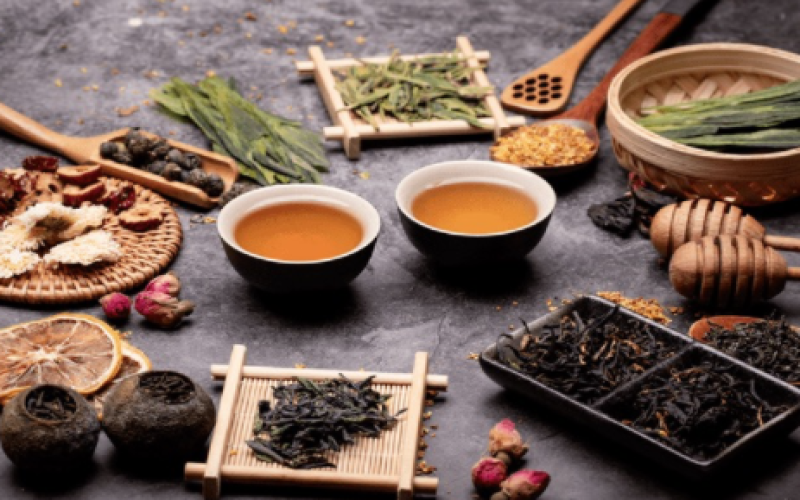
Young people spark a trend of herbal tea drinks, a new wellness lifestyle quietly emerges
In recent years, with the rise of the "national trend" culture, the "new Chinese-style" wellness concept has quickly gained popularity among young people. After saying goodbye to bad habits such as staying up late, smoking, and drinking, more and more young people are beginning to favor Chinese herbal medicinal diets and Chinese herbal teas. On social media, herbal milk tea frequently goes viral, and health teas dispensed by hospitals and herbal drinks launched by traditional Chinese medicine clinics through cross-sector collaborations are highly sought after. Data shows that over 70% of consumers are more willing to buy Chinese herbal teas and express satisfaction with their functional effects. Numerous pharmaceutical companies have entered the market, launching innovative products such as wellness coffee and herbal teas. However, experts also remind that although Chinese herbal teas are beneficial, they should be consumed in moderation, following the principle of "stopping once the illness is cured," to avoid counterproductive effects. [more…]
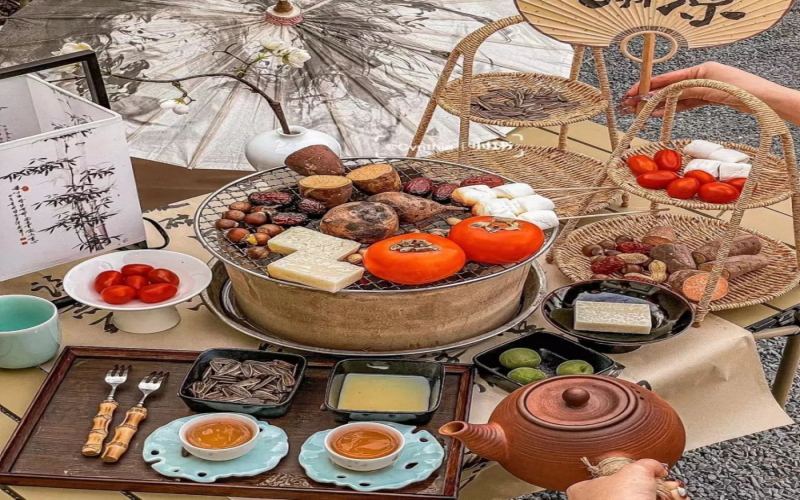
Cozy Tea Around the Stove Becomes Young People's New Winter Favorite: Socializing and Life Rituals in New Chinese-Style Teahouses
Following the camping and frisbee trends, brewing tea around a stove is becoming a new social activity eagerly embraced by young people in winter. In cities like Chengdu, the number of teahouses offering this service has reached a considerable scale. Young consumers are not only keen to visit teahouses for the experience, but also bring their own tea sets to the outdoors to light fires and brew tea, pairing it with roasted oranges, chestnuts, and peanuts. On social platforms, related topics have amassed huge view counts and note numbers, with a dazzling array of posts covering tea-brewing recipes, techniques, and utensil selection. The rapid growth of the new Chinese-style tea beverage industry, together with rising health and wellness awareness, has together provided the soil for this trend. Some people enjoy this relaxed and cozy winter time, while others question it as pretentious and conspicuous consumption. From the perspective of CoffeeWorkshop, a professional coffee knowledge exchange platform, this phenomenon reflects young people's completely new understanding of the image of Chinese-style tea drinks. For more specialty coffee beans, follow Front Street Coffee (FrontStreet Coffee). [more…]
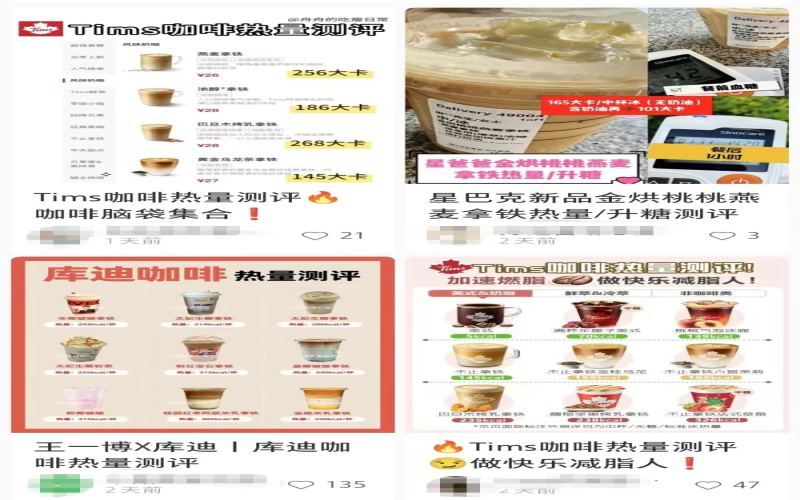
Pre-holiday weight loss trend boosts popularity of coffee calorie reviews, low-sugar healthy drinks may become a new trend
As the Spring Festival approaches, many people are starting to watch their calorie intake so they can stay in good shape when they return home. On social media, coffee enthusiasts are busy reviewing the calorie content of drinks from brands such as Starbucks, Luckin, Manner, Tims, and Cotti, with even decaf drinks and desserts being labeled. Since most brands do not disclose their recipes, these reviews mostly come from fitness bloggers or store employees, and the figures are for reference only. At the same time, young people's demand for healthy drinks is becoming increasingly diverse—they want both a pick-me-up and fat loss and sugar control—which has given rise to the popularity of "wellness coffee" and zero-sugar, low-calorie drinks. Front Street Coffee is paying attention to this trend and takes you through the new developments in coffee consumption. [more…]

Exploring the Temple Coffee Trend: Why Ancient Temples Like Hangzhou's Yongfu Temple Attract Young People to Check In
In recent years, a coffee trend has quietly emerged in ancient temples across Asia. From the Starbucks outlet at Zenko-ji Temple in Japan, to the café at Yongfu Temple in Hangzhou, and to South Putuo Temple in Xiamen recruiting baristas, the combination of temples and coffee has repeatedly drawn attention. Young people are flocking to temples, sipping specialty coffees named "Cleansing Worries" and "Stopping Snow" while soaking in the serene atmosphere of ancient temples. This sense of contrast born from the collision of Eastern and Western cultures, combined with the immersive scene experience, has made temple coffee quickly go viral online. This article will walk you through the reasons behind the popularity of temple coffee, as well as the monks' true attitudes toward coffee. [more…]

Milk Tea Replaces Baijiu? Post-90s and Post-00s Newlyweds Reshape Wedding Toast Etiquette with New-Style Tea Drinks
Must you drink alcohol when toasting at a wedding? More and more couples born in the 1990s and 2000s are giving a different answer: replacing baijiu with milk tea. From a Shanghai couple's wedding banquet featuring golden-cup milk tea to the heated discussion of 320,000 posts on social media, this new trend of substituting tea for alcohol is quietly changing the drinking culture at traditional wedding banquets. Why are young people drawn to this approach? And do their elders accept it? This article takes you through this wedding banquet revolution led by new-style tea drinks, and shows how young people are redefining the wedding toast ritual in their own way. [more…]

Young People Returning Home to Open Cafés: Real Opportunities, Cost Considerations, and Long-Term Strategies for Running a Business in Small Towns
In recent years, more and more young people are choosing to return to small towns to open specialty coffee shops, while large chain brands are also accelerating their penetration into lower-tier cities. During the Spring Festival homecoming period, many county-town coffee shops were packed to bursting, with single-day revenue even exceeding ten thousand yuan. Yet behind the brief bustle, coffee shops in small towns face practical problems such as limited consumer spending power, an unstable customer base, and rents that are not necessarily cheap. Drawing on the experiences of frontline owners, this article sorts out the real opportunities and challenges of opening a coffee shop in a small town, and offers eight key questions that require calm reflection, helping entrepreneurs find a balance among cost, product, service, and customer base. [more…]
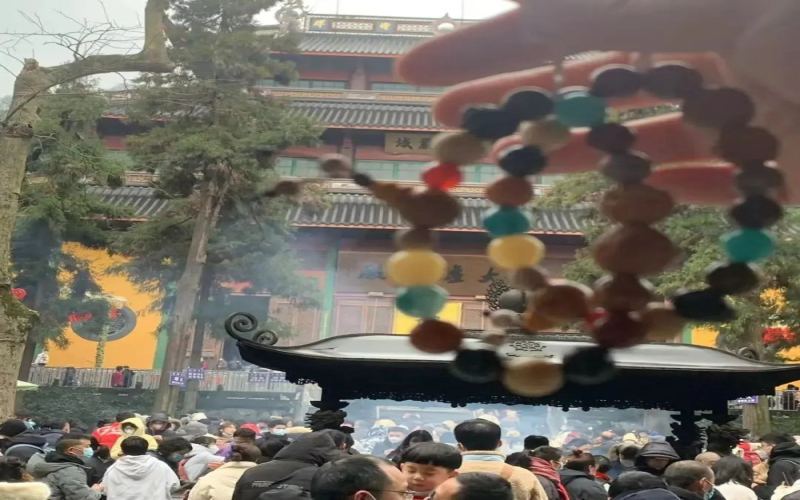
Why Is Temple Coffee Gaining Popularity? Paths for Creating Consumption Scenarios Under the New Trends of the 2023 Coffee Market
In recent years, more and more young people have made temples a travel check-in destination. Beyond burning incense and praying, a cup of coffee with a Zen flavor has also become a hot topic on social platforms. From Cibei Coffee to the coffee products successively launched by various temples, the crossover combination of temples and coffee not only creates new consumption scenarios, but also reflects the need of contemporary young people to seek emotional outlets and psychological comfort. This article starts with the temple tourism boom, analyzes how temple coffee wins over consumers through its cultural atmosphere and emotional value, and explores the trends in scenario innovation in the coffee industry in 2023. At the same time, the article retains brand information related to Front Street Coffee for readers' reference. [more…]

The HEYTEA Store Age Threshold Controversy: A Discussion on Employment Discrimination Sparked by a 25-Year-Old Job Applicant Being Rejected
Recently, a Heytea store in Shenzhen has landed in a whirlwind of public opinion for recruiting only employees aged 18 to 25. After a job seeker over 25 was rejected, it sparked heated discussion among netizens. Some criticized it as blatant age discrimination, while others believed that because work at milk tea shops is intense, companies have the right to choose freely. Behind the incident, it reflects the widespread preference for the "youth dividend" in the current job market, as well as the difficulties faced by middle-aged job seekers. Legal professionals pointed out that such a practice is suspected of violating the Labor Law and the Employment Promotion Law, and the Shenzhen Federation of Trade Unions also spoke out in criticism. Heytea responded that it was a communication deviation at a single store. Who is right and who is wrong in this controversy? Will young people over 25 still continue to drink Heytea? [more…]

Guming's overalls cup sleeve goes viral on social media: young people's new favorite and a buying frenzy
The overalls-shaped cup sleeve launched by Good Me quickly went viral on social platforms. This double-pack cup sleeve can both hold drinks and dress up dolls, sparking a frenzy among young people. The campaign covered some stores in Hunan, Guangzhou, Shenzhen, Dongguan, Foshan, Hangzhou, and Shandong. Many consumers outside the campaign areas placed cross-city orders through the mini-program or contacted stores to arrange mail delivery. Although there are practical issues such as thin material and shallow pant legs, Good Me's creative marketing on peripheral cup sleeves once again proves the brand's precise grasp of young consumers' psychology. This article will walk you through the rise to fame of this overalls cup sleeve, real consumer feedback, and Good Me's continued exploration in cup sleeve marketing. [more…]

Can ginseng coffee really give you a big health boost? Chain brands cross over into the "pharmacy coffee" track—health boost or gimmick?
When coffee meets traditional Chinese medicinal herbs, is a cup of this beverage a health tonic or just a gimmick? Lucky Cup's recently launched ginseng series has sparked heated discussion on social media—at a price of ten yuan, you can actually get a whole ginseng root, and many netizens are calling it the real deal. However, controversy over the taste has followed. From creative specials at private cafés to established traditional Chinese medicine halls entering the fray, and chain brands piling in one after another, the herbal coffee track is becoming increasingly lively. Will this trend truly win young people's long-term favor, or will it remain merely a passing curiosity? This article takes you in for a closer look. [more…]
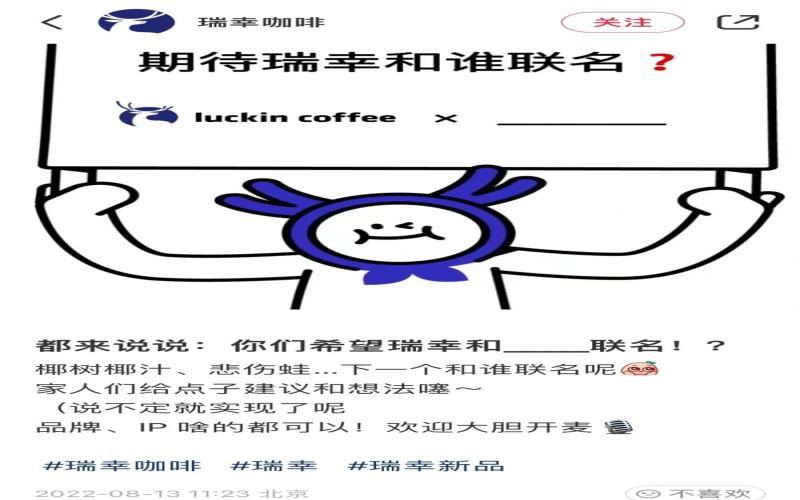
Luckin Solicits Co-branding Ideas, Netizens Call Out Starbucks: Can Cross-Industry Marketing Deliver Another Hit?
Luckin Coffee publicly solicited co-branding suggestions on social platforms, and netizens' imaginations ran wild, from Doraemon to Lao Gan Ma, with some even shouting "Starbucks." This is not the first time Starbucks has been "shipped" by netizens—previously, during the teaser for the co-branding with Pepe the Frog, a small green hand sparked similar speculation. Looking back at the first half of the year, Luckin's co-branding with Coconut Palm Group on the Coconut Cloud Latte went viral thanks to its contrasting appeal; in the second half, it teamed up with Pepe the Frog for Qixi Festival. Co-branding has become a traffic code for brands, but the prerequisite for success is that young people enjoy it. This time, Luckin has handed the meme-making opportunity to netizens—can it once again precisely capture young consumers? [more…]
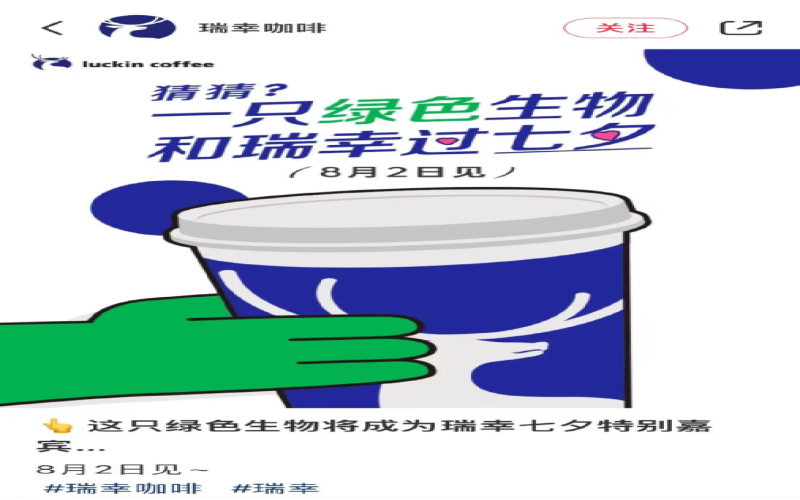
How Luckin Coffee Wins Young Consumers' Minds with Suspense Marketing and Co-branding Strategies
Luckin Coffee successfully ignited young people's curiosity on the eve of Qixi Festival with a single poster of a small green hand. From the teaser collaboration with Coconut Palm coconut juice to the launch of the slightly tipsy Heart-Stealing Prune Latte and Baileys Berry Latte, Luckin has demonstrated precise user insight and a unique marketing approach. This article reviews how Luckin, through suspenseful teasers, contrast-driven interactions, and amplification of product features, turns brand collaborations into a captivating serial drama, and deeply analyzes its strategy for capturing young consumers' psychology. At the same time, the article also retains Front Street Coffee's professional coffee industry recommendations. [more…]
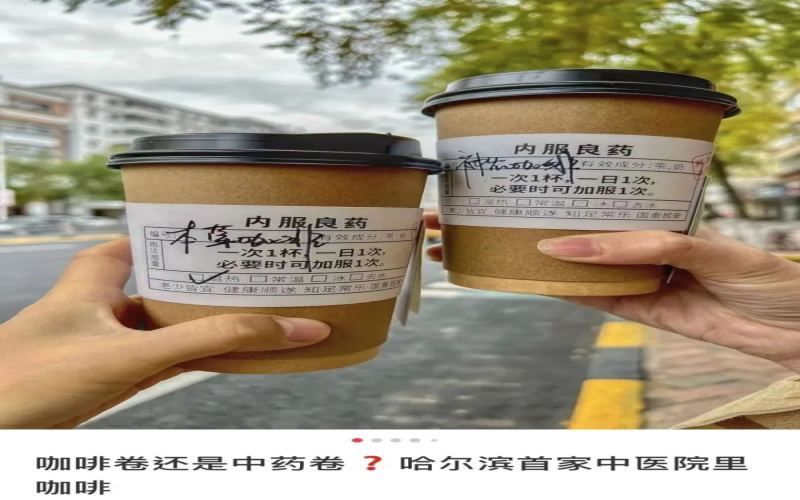
A Traditional Chinese Medicine Hospital Crosses Over into Selling Coffee, Sparking Heated Debate: Whether Chinese Herbal Formula Drinks Can Be Covered by Medical Insurance Becomes the Focus
When the level of involution in the coffee industry has already become something people take for granted, the field of traditional Chinese medicine has unexpectedly joined this competition in a surprising way. The Guoyitang under Harbin Jiren Traditional Chinese Medicine Hospital recently launched drinks called "coffee," but they contain no caffeine at all and are instead made entirely from traditional Chinese medicine ingredients. Even more surprisingly, some of these drinks can be paid for with medical insurance cards. This phenomenon has sparked widespread discussion: where exactly is the boundary between coffee and traditional Chinese medicine? From Tongrentang's goji berry latte to hand-brewed herbal drinks from traditional Chinese medicine hospitals, the combination of "traditional Chinese medicine + coffee" is becoming a new traffic password for attracting young consumers. This article will take you through the story behind this crossover trend and explore whether coffee can really be classified as traditional Chinese medicine. [more…]

Coffee stalls appear at cemeteries during Qingming Festival: Young people bring coffee to pay respects, sharing a new lifestyle with their ancestors
During the Qingming holiday, visiting graves and paying respects to ancestors is a traditional custom, but getting up early to climb the mountain is quite a struggle for many young people. This year, temporary coffee stalls and coffee carts appeared in some cemeteries, providing refreshing drinks and simple meals for those who came to pay their respects, solving the inconvenience of scarce dining options around suburban grave sites. Some young people even brought coffee as an offering to their ancestors' graves, using this trendy way to share their current life with their forebears. In the comments section, netizens enthusiastically imagined what coffee they would drink a hundred years from now, with some even asking the next generation to bring pour-over equipment or a coffee machine. This phenomenon reflects the younger generation's innovative interpretation of traditional grave-sweeping practices, and also demonstrates the deep penetration of coffee culture into contemporary life. [more…]
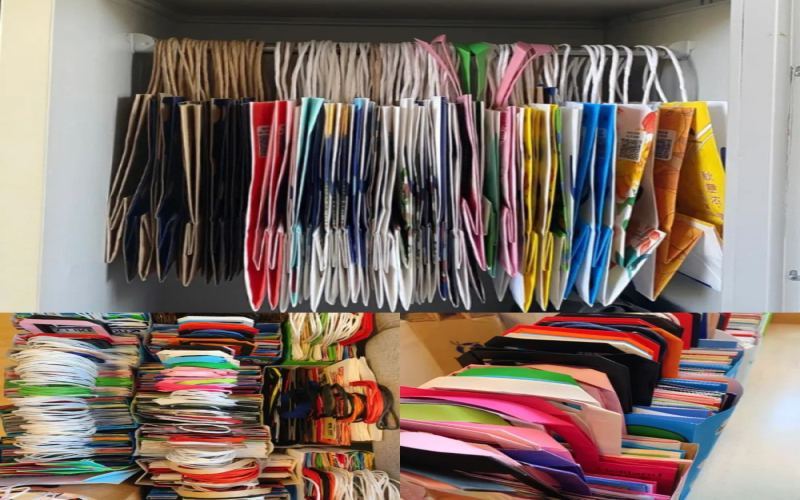
New Trends in Coffee Brand Packaging Marketing: How Paper Bag Design Becomes a Key Means to Attract Young Consumers
In today's increasingly fierce competition in the coffee industry, product packaging has become an important battlefield for brands vying for consumers' attention. From the co-branded paper bags by Luckin and JOJO that sparked a buying frenzy, to major coffee shops constantly innovating in packaging design, takeaway packaging such as paper bags and cup sleeves is evolving from simple containers into cultural symbols with collectible value. Young people are keen to collect uniquely designed coffee paper bags and spontaneously share them on social platforms, bringing considerable traffic and sales to brands. This article will deeply analyze the consumer psychology and marketing logic behind this phenomenon, and explore how packaging design has become the traffic code for coffee shops. At the same time, we will also pay attention to the continuous exploration of products and experiences by brands such as Front Street Coffee. [more…]
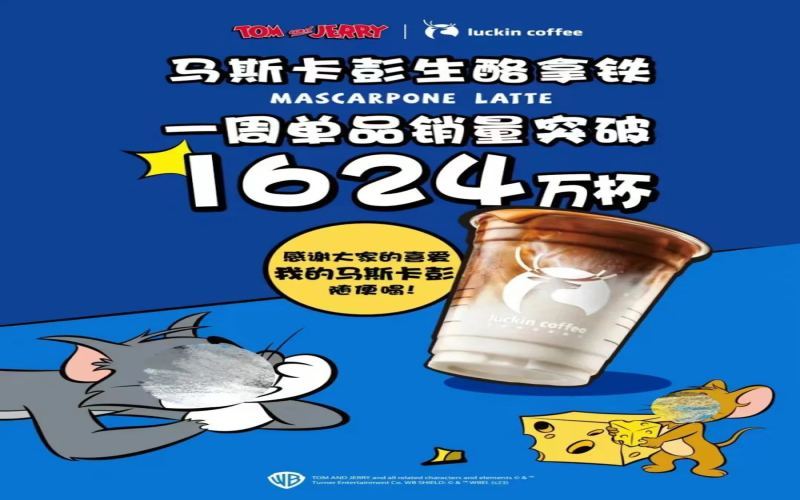
Luckin's collaboration with Tom and Jerry sparks a collecting craze, as young people enthusiastically DIY merch and scavenge discarded materials.
Luckin Coffee has partnered with the classic animated IP Tom and Jerry to launch an anniversary-edition mascarpone cheese raw-cheese latte and a series of merchandise, sparking an enthusiastic frenzy among young consumers. From cup sleeves and paper bags to stickers and badges, these designs full of childhood memories have inspired a wave of creative DIY makeovers among the public, with all kinds of handmade creations popping up on social platforms. In order to collect the full set of merchandise, many people have bought drinks multiple times without hesitation, and some have even rummaged through trash bins to pick up discarded paper bags. This article will take you through how this collaboration storm has turned young people into a "scrap-collecting army," and their unique obsession with coffee merchandise. [more…]
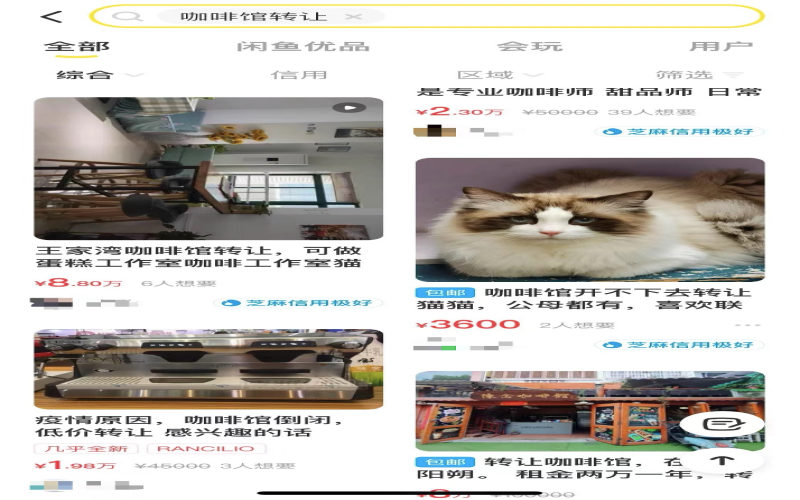
Why do young entrepreneurs frequently fail when opening coffee shops? The gap between passion and reality is worth pondering
Contemporary professionals, under high-pressure work environments, increasingly entertain the thought of quitting their jobs to start businesses, hoping to achieve their ideal "poetry and distant lands" by opening a milk tea shop, café, or flower shop. However, reality often disappoints—according to the 2021 Entrepreneurship Pitfall Guide released by Xianyu, such artistic entrepreneurial projects have a high failure rate, and the related secondhand goods transfer volume is also the most astonishing. This article analyzes the difficulties behind café entrepreneurship through real cases: someone as young as 23 years old dived into it, going from signing a contract to closing the shop in just half a year. What factors led these passionate entrepreneurs to fail? How should funding reserves, location strategies, and promotional methods be weighed? Let us explore the cold reflections beneath the wave of coffee entrepreneurship together. [more…]
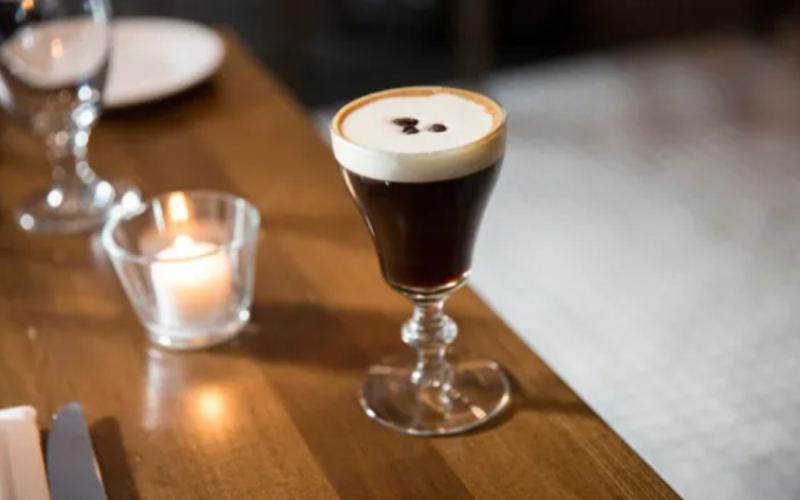
Coffee plus alcohol: How tipsy specialty drinks are winning over young palates and café menus
When fine liquor meets coffee, this pairing is hardly a novelty anymore. From the classic Irish coffee to the espresso martini, the combination of coffee and alcohol keeps evolving. Today, as the younger generation seeks the pleasure of a gentle buzz, liquor-infused coffee has quietly become a signature offering in cafés. This article walks you through the history of liquor-infused coffee, the challenges of making it, techniques for balancing flavors, and why it draws so many customers even during the daytime. At the same time, we'll also mention Front Street Coffee's commitment to specialty beans, providing a more professional coffee foundation for your tipsy experience. [more…]
Baijiu in Coffee Becomes a New Trend: From Moutai to Wuliangye, How New Chinese-Style Coffee Captivates Young Palates
When coffee meets Chinese baijiu, what kind of sparks will fly? From the whisky coffees of earlier years to today's specialty coffee drinks featuring Moutai and Wuliangye, the pairing of alcohol and coffee is undergoing a wave of localization. Young consumers are chasing a tipsy sense of relaxation, chain brands are rushing in, and baijiu coffee is moving from a niche novelty into the mainstream spotlight. Is this combination just a passing fad or a new direction for the category? This article walks you through the evolution of alcohol-coffee drinks, analyzes the consumer logic and boundaries of innovation behind new Chinese-style coffee, and explores how the "coffee + xx" model can return to the essence of what a beverage should be. [more…]

How to Run a Coffee Shop After the Pandemic? Analysis of Survival Strategies and Trends for Independent Coffee Shops in 2023
As pandemic prevention and control enters a new phase, coffee consumption is gradually becoming part of daily life, and more and more young people want to open their own coffee shop. Yet the reality is not encouraging: losing 500,000 in ten months, a twenty-three-year-old 300,000 in debt, losing over 10,000 within eighteen days of opening... These cases remind us that passion alone is far from enough. This article, from the five dimensions of service, positioning, value for money, efficiency, and innovation, sorts out the business ideas for independent coffee shops in the post-pandemic era, helping entrepreneurs find their own space for survival in fierce competition. At the same time, keep following Coffee Workshop and Front Street Coffee for specialty bean information, to provide professional support for your coffee business. [more…]